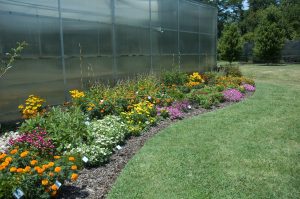
 The All American Display Garden is located outside the propagation greenhouse next to the Potager Garden.
All-America Selections National and Regional Winners have been tested for garden performance by a panel of expert judges. Varieties that perform best over all of North America become AAS National Winners. Entries that performed particularly well in certain regions are named AAS Regional Winners. The AAS Winners offer gardeners reliable new varieties that have proven their superior garden performance in Trial Grounds across North America, thus, our tagline of “Tested Nationally and Proven Locally®”. Only the best garden performers (best scores) become AAS Winners.
AAS Display Gardens provide the public with an opportunity to view the newest AAS Winners in an attractive well-maintained setting.
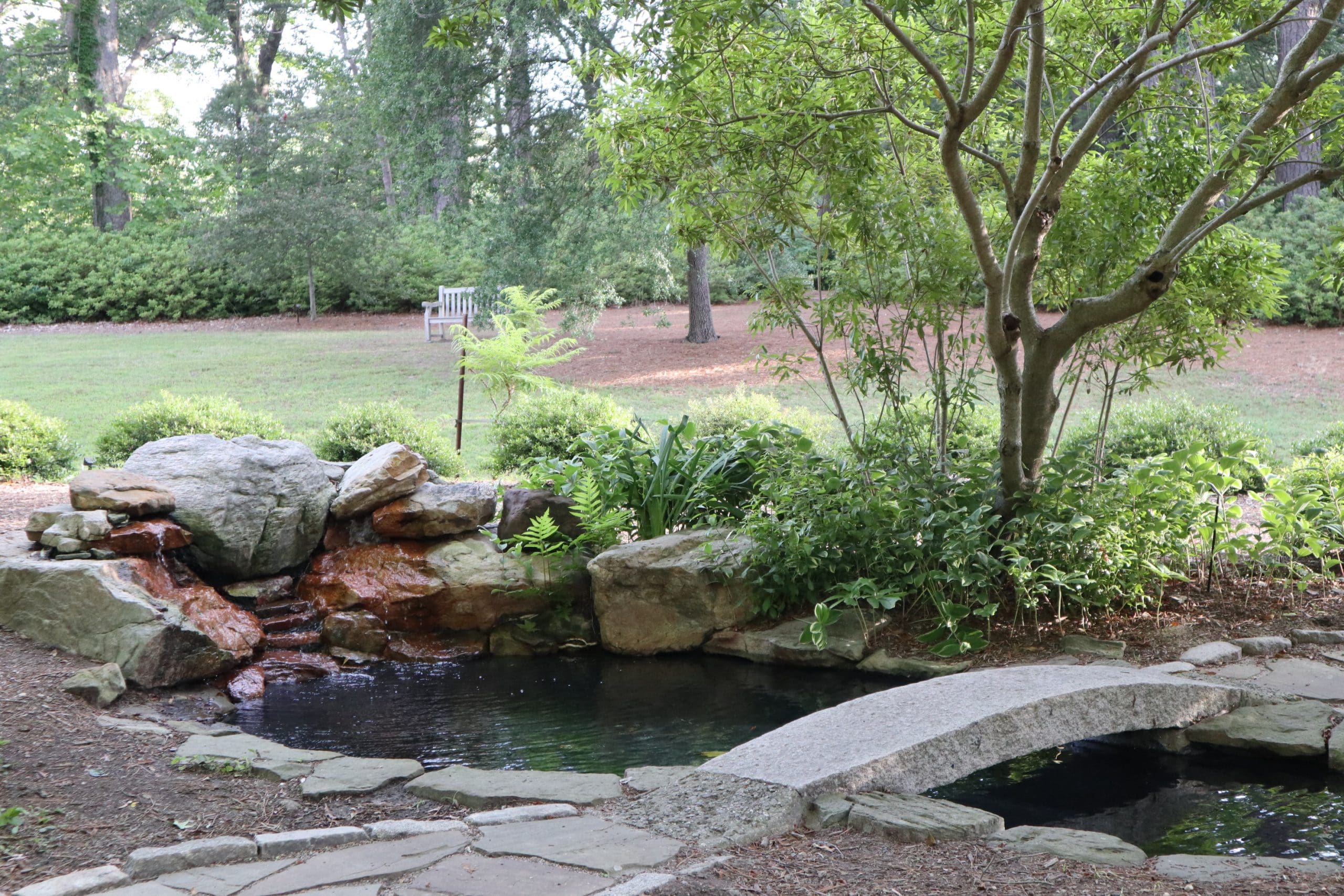
This garden features a number of native plants that have been historically valued by Coastal Virginia’s indigenous community for their healing properties. In addition to medicinal healing, this garden is also a soothing place for mental healing and for reflection. Stroll beside a small stream with quiet pools, cross over a granite footbridge, and enjoy some of the plants here including yaupon holly, sassafras, Virginia strawberry, wild ginger, and spicebush. Adjacent to this garden, a wide path offers views of the canal, Cobblestone Bridge, and Lake Whitehurst beyond.
The rose garden was dedicated in 1976 as a bicentennial tribute to the nation. This garden has been accredited as one of 130 All-American Rose Selections Display Gardens.
Over 3,000 rose plants representing more than 300 varieties grow in this garden. At the height of bloom, mid-May through October, more than 250,000 rose blooms may be seen.
This garden has an accessible terrace overlooking seating areas, fountains, and picturesque garden surroundings. New pavers have also been added to this Garden as a part of the Garden of Tomorrow Project.
Roses are one of the Garden’s primary collections.


Taking inspiration from traditional mixed English border gardens, this garden features a mix of annuals, perennials, shrubs, and a few trees, including an unusual variegated sweetbay magnolia and an impressive Hercules club. While spring and summer offer the most color, the garden is also filled with fall and winter plants, including some early season daffodils. Forming a backdrop are several upright yaupon hollies, one of Coastal Virginia’s best native shrubs. Visitors will also find assorted viburnums, including a pair of massive Chinese snowball viburnums. The garden includes a variety of salvias, peonies, trellised clematis, daisies, conifers, asters, phlox, daylilies, and much more, including an extensive collection of Japanese iris. Expansive views of the Rose Garden, the Sub-tropical Garden, and the canals can be enjoyed from benches on the backside of the garden, and the adjacent lawn is a popular picnic site.

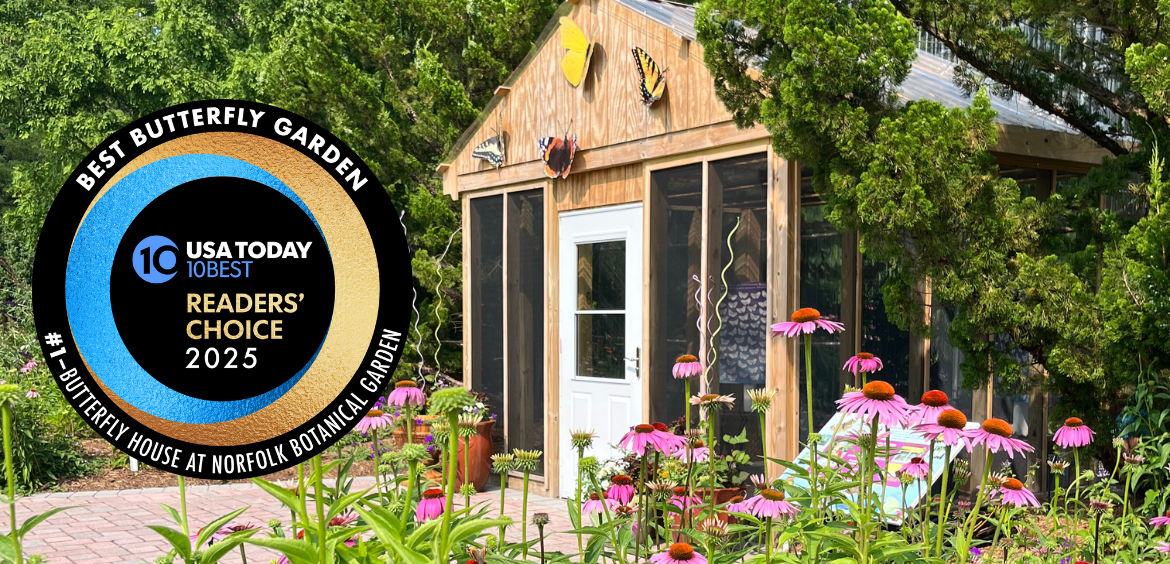
The 2.5-acre Bristow Butterfly Garden provides habitat to attract and support butterflies and moths native the Coastal Virginia. It also provides visitors a chance to see which nectar plants and which host plants they can grow in their own gardens to support these beautiful creatures. The centerpiece of this garden is the Butterfly House, which is open seasonally, but the surrounding gardens are open year-round, including the Butterfly Maze, and the Butterfly Gazebo, a popular waterfront wedding venue.
Visit our Butterfly House page for more detailed information.
Taking its inspiration from traditional Southern gardens and centered around an antique olive jar, the Circle Garden has been planted for year-round interest. In winter hellebores bloom, followed by a variety of narcissus, spring-blooming camellias, then azaleas, and in summer hydrangeas are blooming. A delightfully fragrant treat for the nose occurs in late spring when the star jasmine blooms. In autumn, sweeps of goldenrod bloom just before the Japanese maples take on their fall colors. Several benches in the garden offer a shady place to rest away from the sun while enjoying quiet conversations or silent contemplation.

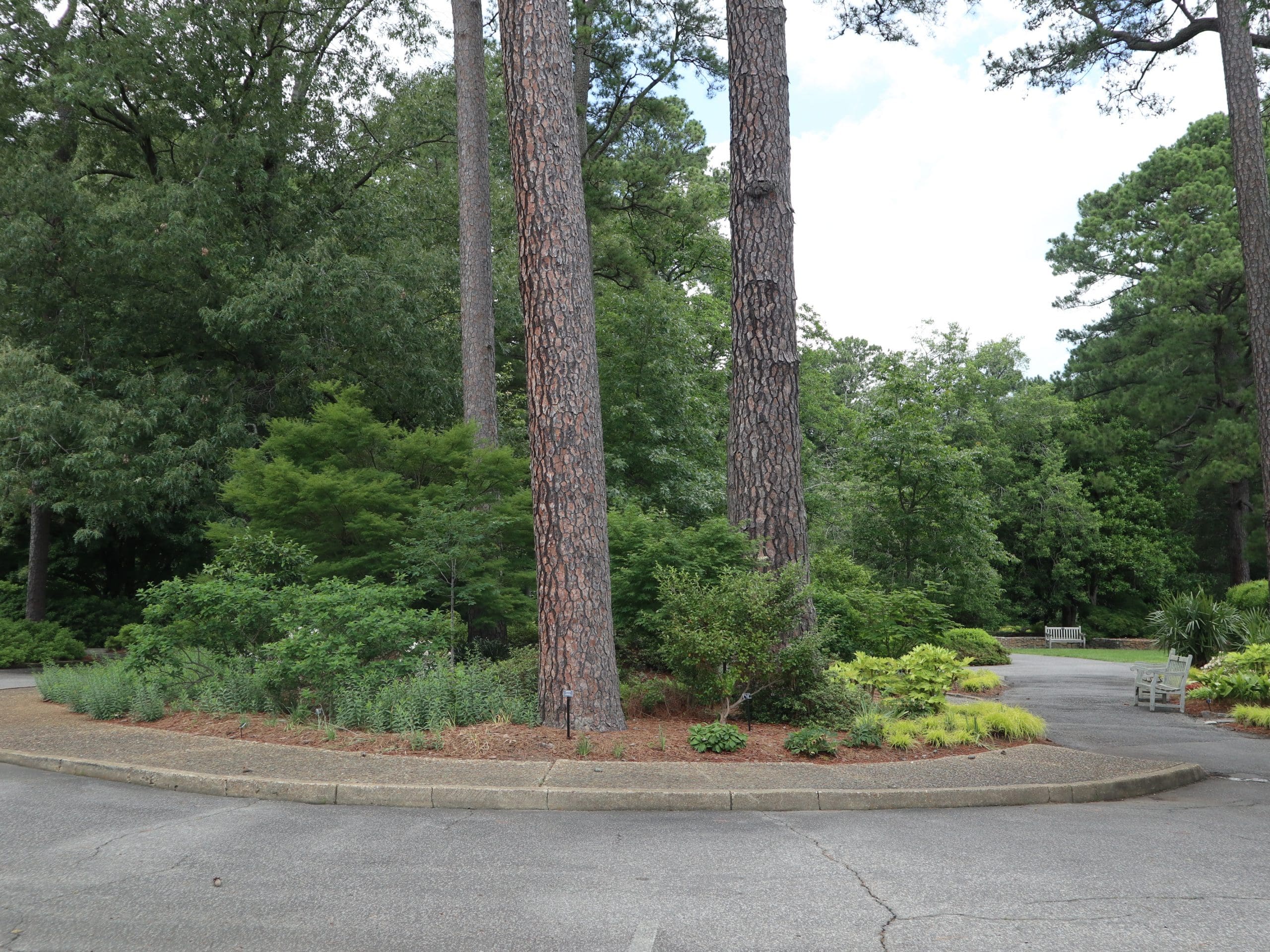
The Flowering Arboretum fills 17.5 acres in the center of the Botanical Garden. In 1982, a section of Crapemyrtle trees was added to the original acreage. Today the arboretum contains 336 different flowering trees. Because it displays a wide variety of fragrant and colorful flowering trees, homeowners and horticultural students look to the Arboretum as an excellent reference.

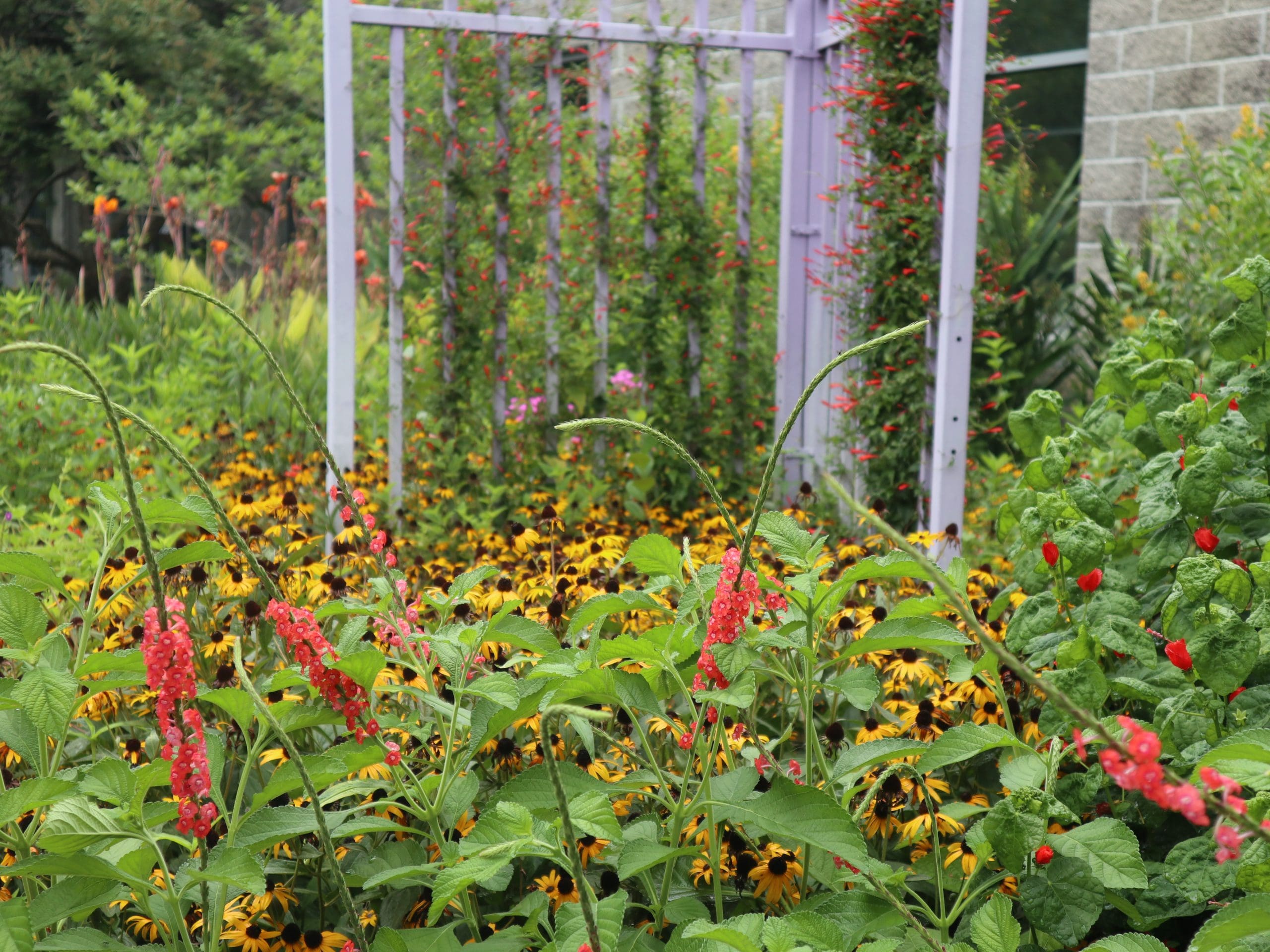
This meadow features a mixture of more than 50 species of wildflowers and 10 species of grasses. The area is an outdoor classroom where one can observe wildflowers and the birds and insects they attract.
It demonstrates an alternative to traditional high maintenance urban landscaping. Most importantly, the flowers and grasses present a constantly changing vista of natural beauty for those who stroll along its pathways or relax near the flowing fountain in the shade of the gazebo.
Perry E. Morgan donated money for the establishment and maintenance of The Bunny Morgan Memorial Wildflower Meadow, now the Four Seasons Garden, in honor of his late wife, who had long been a wildflower enthusiast.


Located adjacent to the administration building, the Fragrance Garden was conceived as a garden therapy project in the spring of 1963. The City of Norfolk financed the construction and planting of the garden.
A variety of fragrant trees, shrubs, perennials and bulbs bloom during the year. This garden is designed for all who enjoy fragrant plants.
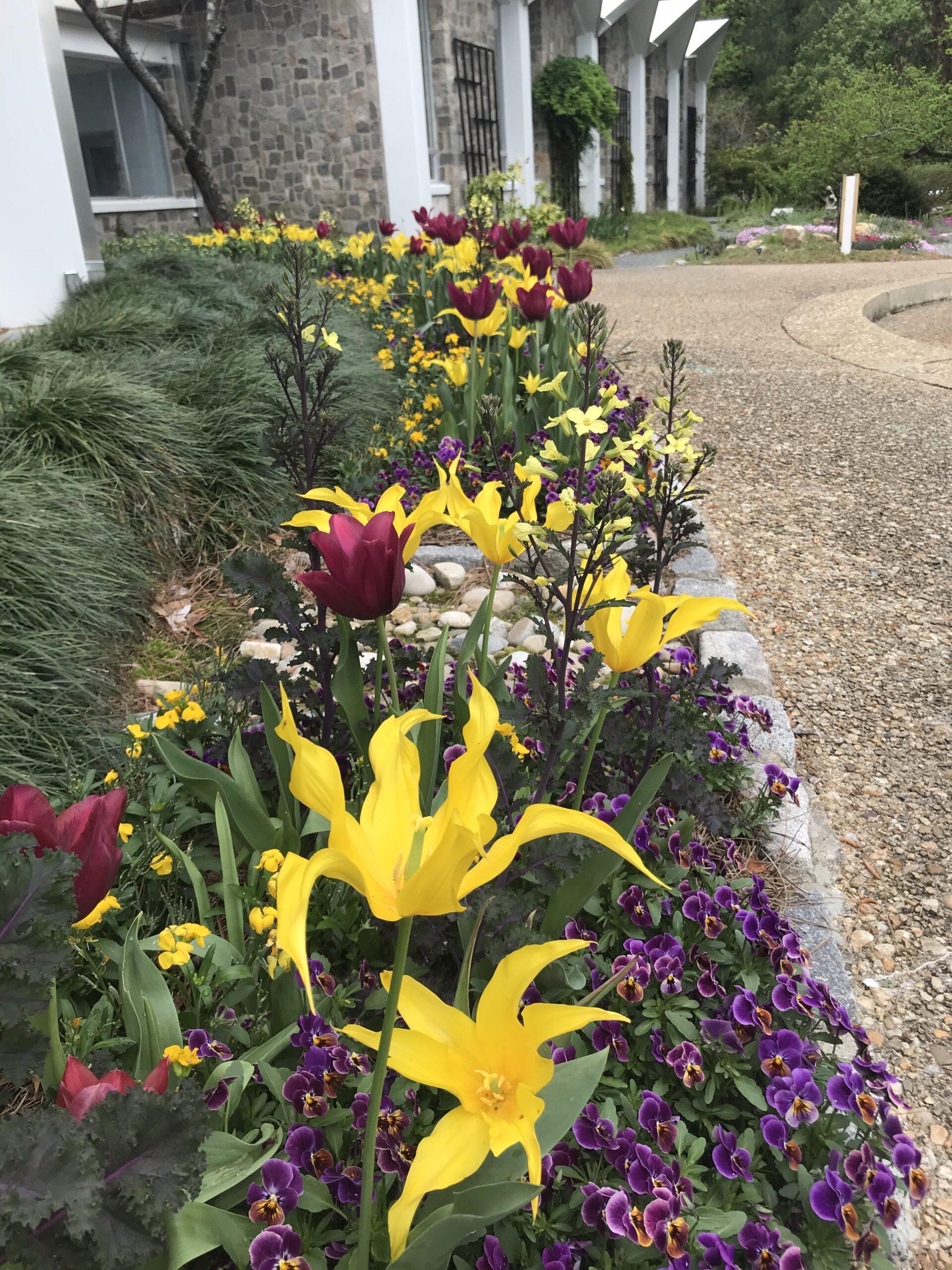
Behind the Education building, this garden includes plants that attract hummingbirds and other nectar loving animals. A mixture of annuals, perennials, shrubs and trees welcome visitors. Keep your eyes open while you are here, because the hummingbirds move fast.
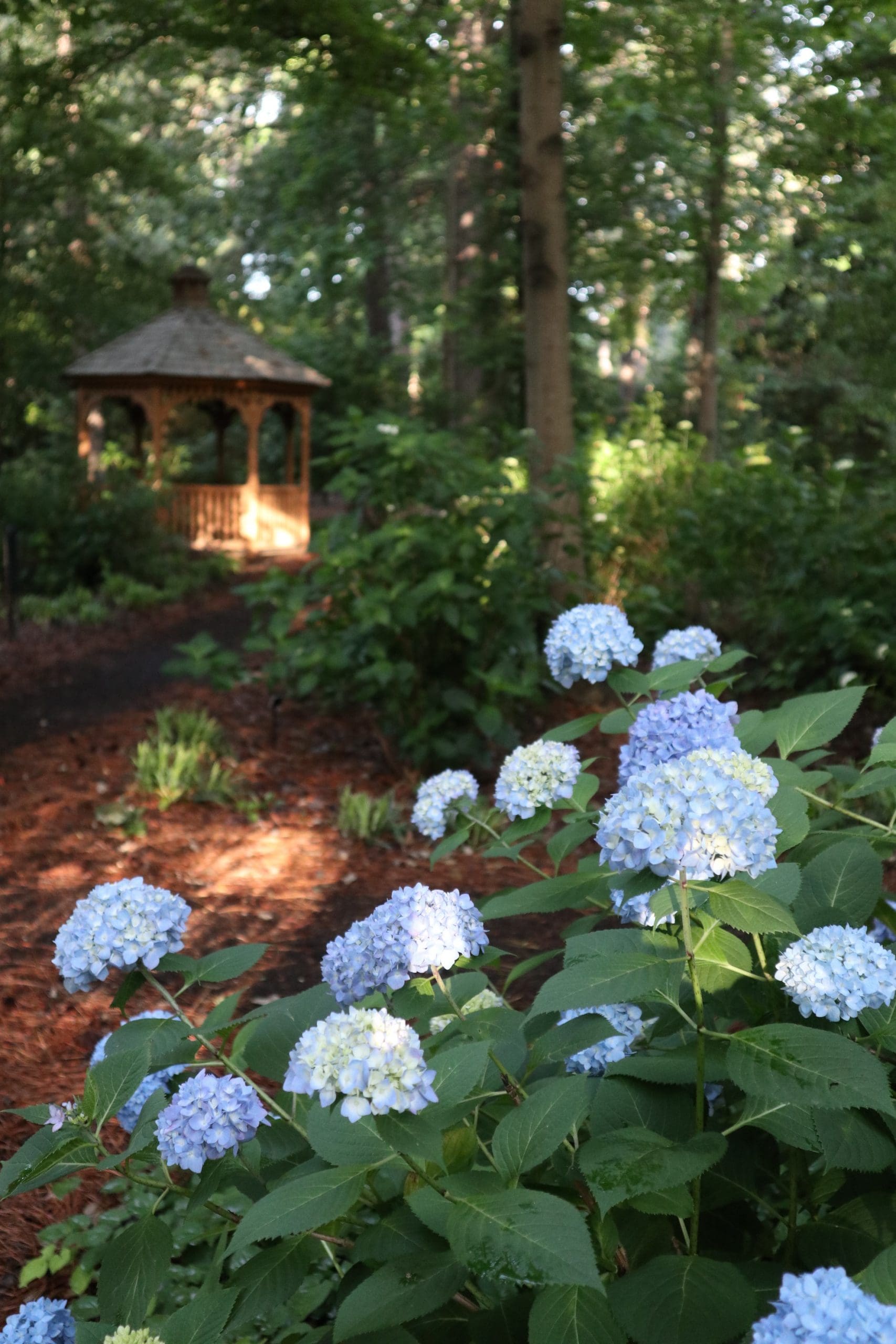
This 1.5 acre garden features approximately 300 hydrangeas representing 20 different species and 200 different cultivars. The most prevalent species in the garden is the Bigleaf Hydrangea (Hydrangea macrophylla) but many other interesting types are found here too.
The hydrangea collection was named an Official North American Collection by the American Association of Botanical Gardens and Arboreta’s North American Plant Collection Consortium (NAPCC). The Garden is one of only 21 National Collection holders designated by the NAPCC, and currently the only one focusing on hydrangeas.
A variety of groundcovers grace the woodland floor including toadlilies, wild gingers and barrenworts.
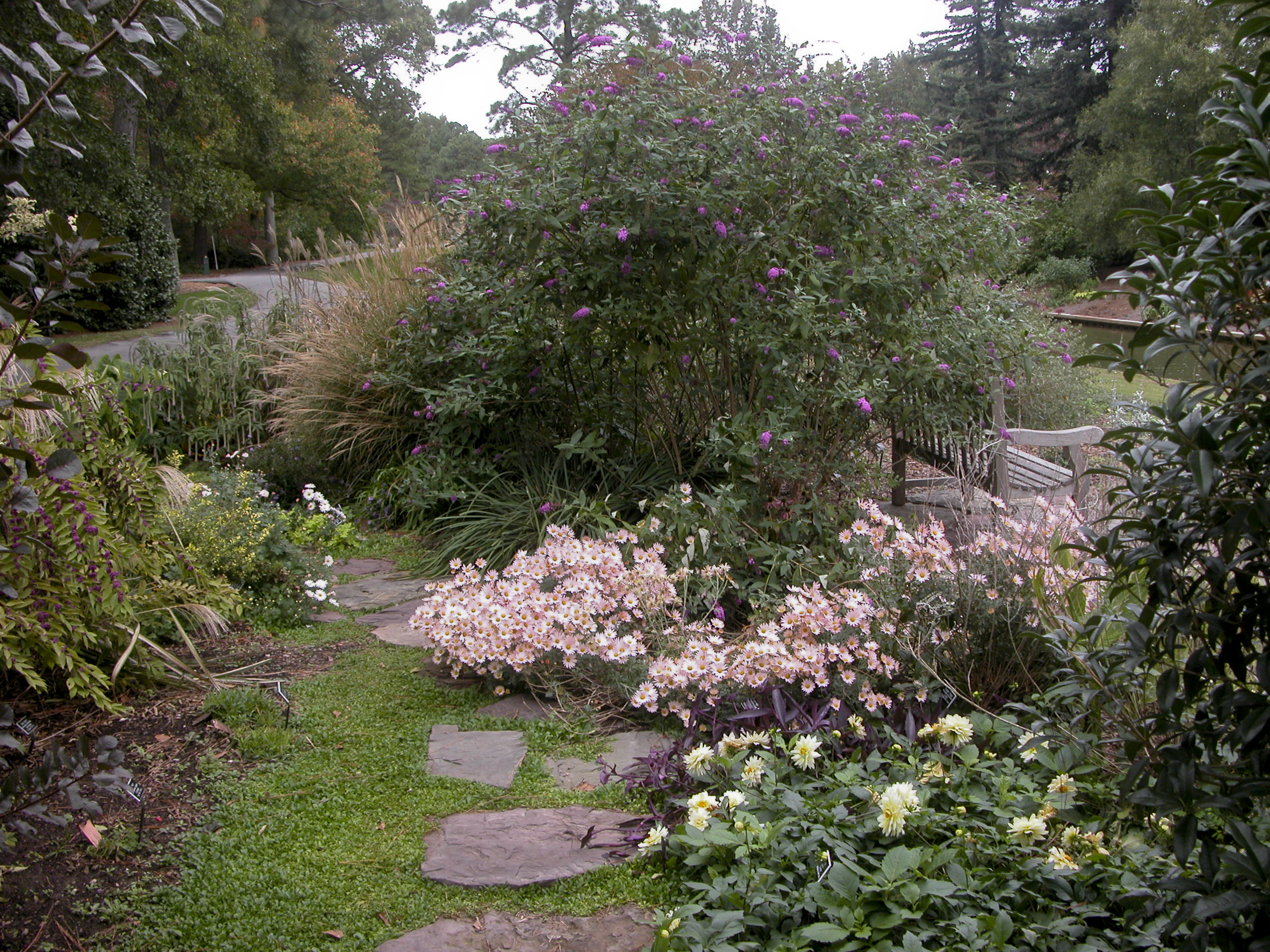
The Matson Perennial Garden is located next to Renaissance Court and the Border Garden. The Garden was created in honor of Pat and Kay Matson, who were known in the Hampton Roads community for bringing new perennials into the area. The Matson Perennial Garden is about a quarter of an acre in size and is filled with new cultivars of the same plants that the Matsons first introduced in the Hampton Roads area and some of the original plants that they donated to Norfolk Botanical Garden. This garden includes both shady and sunny spots, a stream, a dry stack wall and stone pathways. Sweeps of perennials border the canal and smaller plants are tucked into niches along the paved road.
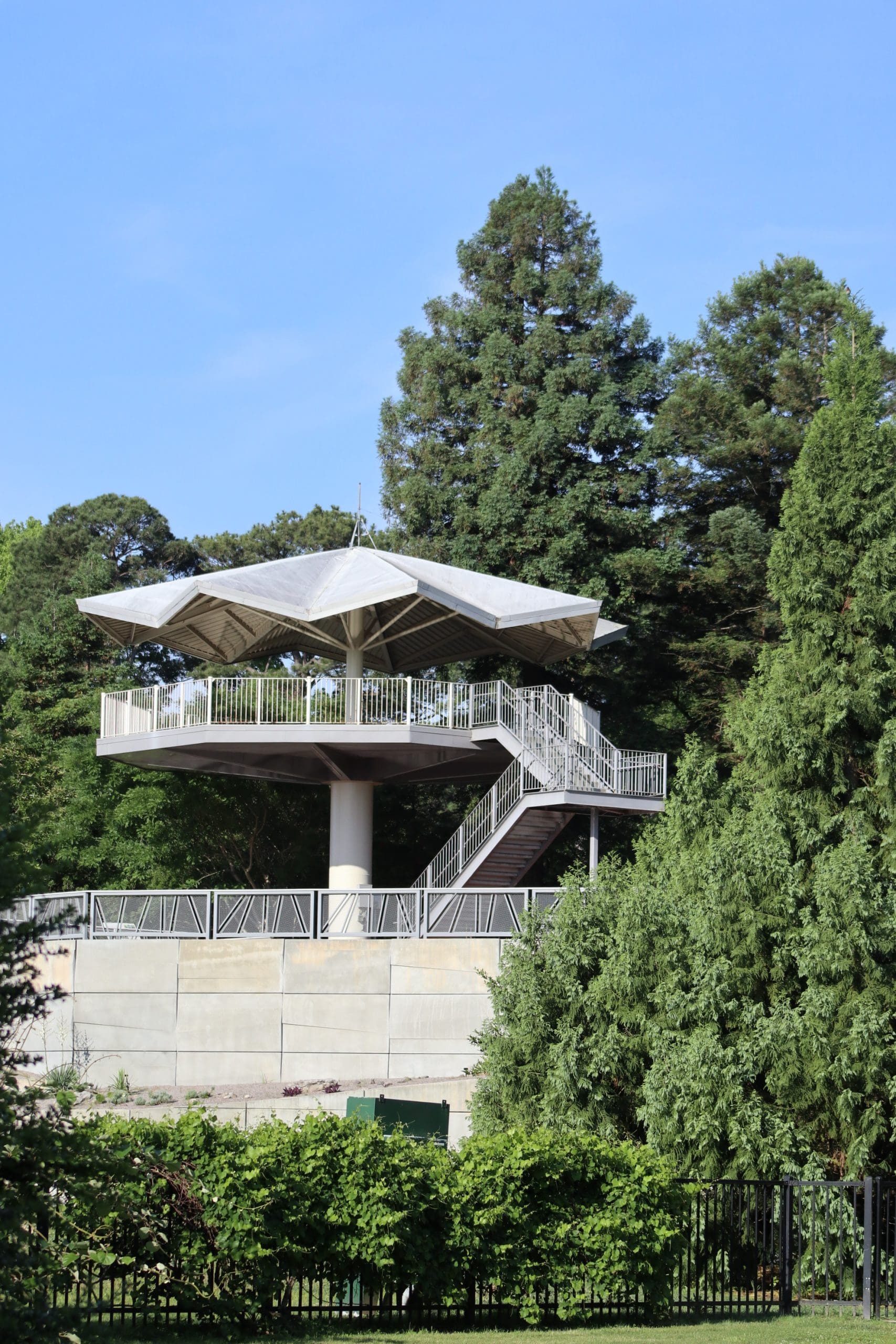
Surrounded by majestic redwoods and blue atlas cedars this spot is centrally located in the Garden. At the top of the overlook, NATO Tower provides a bird’s-eye view of much of the Garden. The tower and overlook are named in honor of the North Atlantic Treaty Organization (NATO) which has its North American headquarters here in Norfolk.
The colorful Flowering Arboretum, vibrant Matson Garden, formal Renaissance Court, lush Tropical Garden and snaking canals are all visible from the overlook. A vareity of drought tolerant plants grow on the slopes of the overlook.
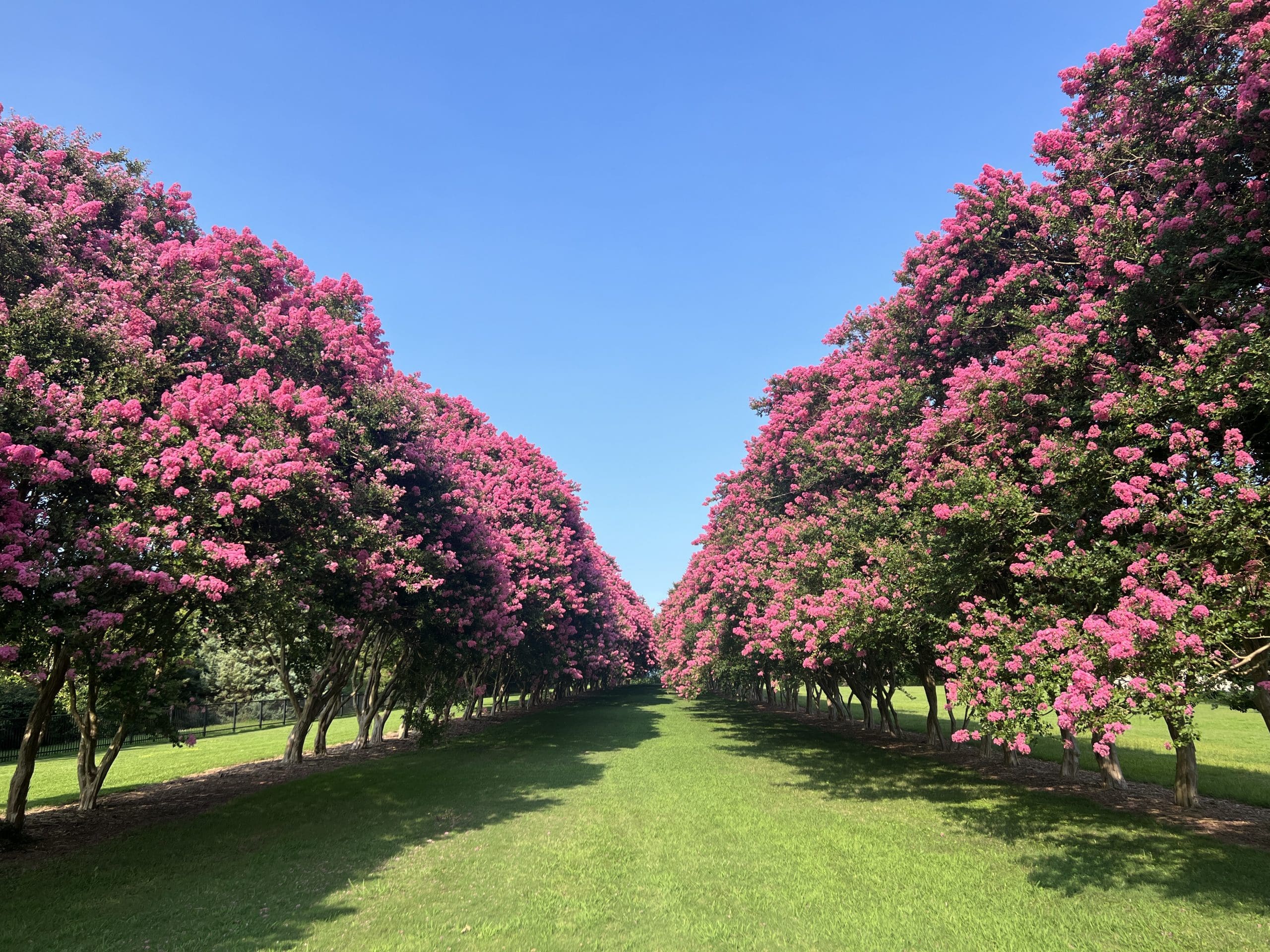
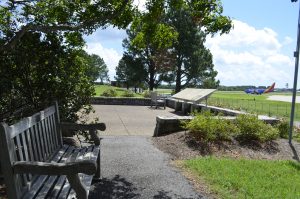
At the top of the berm that separates us from our neighbor, Norfolk International Airport, visitors of all ages can get a great view of planes as they take off and land. A display features a detailed map of the airport and a description of how planes work. Visitors can monitor airport ground communications and learn about wind speed and direction. Visitors can also monitor a live feed of airport traffic. Plantings at the berm include a number of viburnums, dwarf crapemyrtles, arbutus (strawberry tree), dwarf southern magnolia, shrub roses, and others. Adjacent to the overlook and underneath the pines, there are a number of Satsuki azaleas. Satsuki means 5th month in Japanese, and these azaleas are some of the latest to bloom, typically in May, extending the season. In addition, the berm is also home to one of the Garden’s most iconic sculptures, Peruko Ccopacatty’s The Farmers.
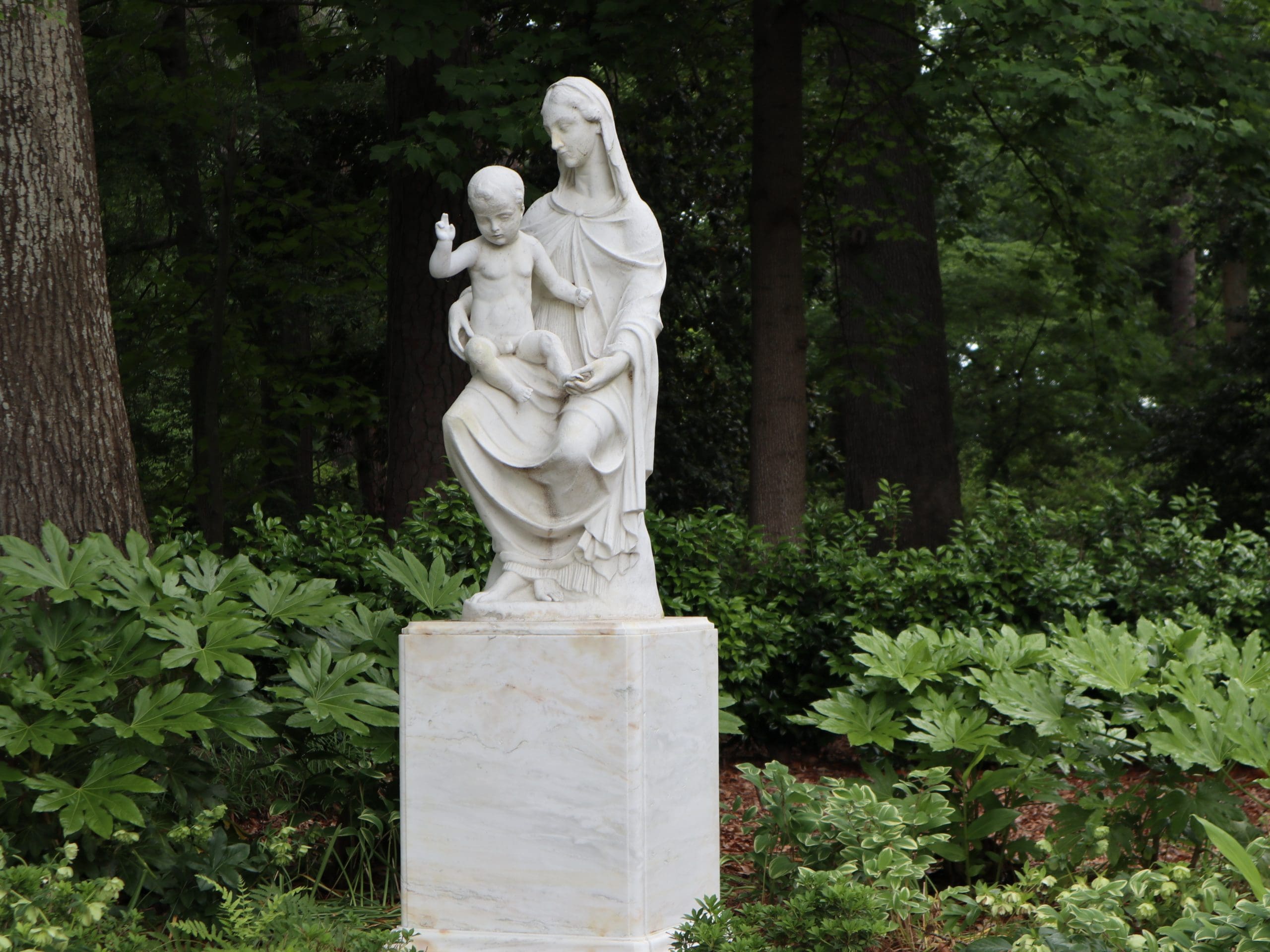
The Purity Garden’s semicircle of camellias provides the backdrop for Cataldi’s sculpture of Madonna and Child. Pure white flowers and deep green foliage surround the focal sculpture in this cool, peaceful garden.
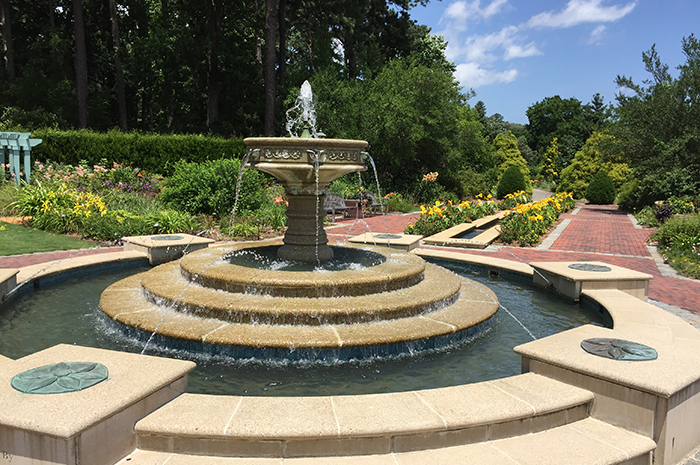
This spectacular 1-acre garden honors Sarah Lee Baker, who funded many features throughout the garden with her husband Isaac “Junie” Baker. Moving water in the central limestone fountain and terraced canals creates a soothing and cooling effect. The formal circular garden is divided into wedges that overflow with more than 200 different varieties of perennials of all shapes and sizes.
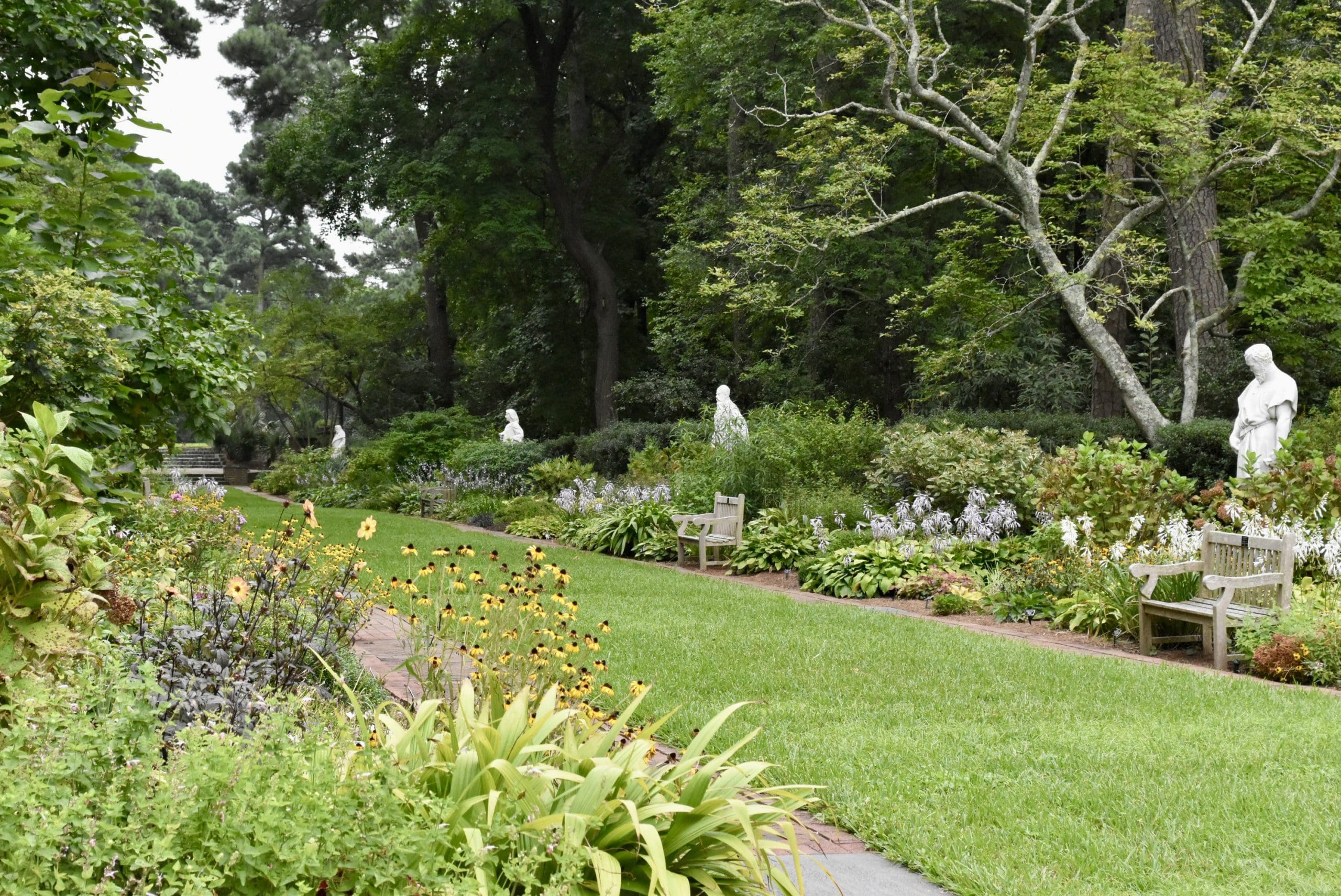
The Statuary Vista is a unique outdoor sculpture gallery set in a 400-foot long double border garden stretching from the back of Renaissance Court to the edge of Lake Whitehurst. This is one of the few shady perennial gardens at Norfolk Botanical Garden and each 14-foot wide, 400-foot long display bed is packed with a variety of bulbs, perennials and annuals. Set against the deep green backdrop of clipped Holly Olive hedges, the statues, flowers and foliage create a stunning display.
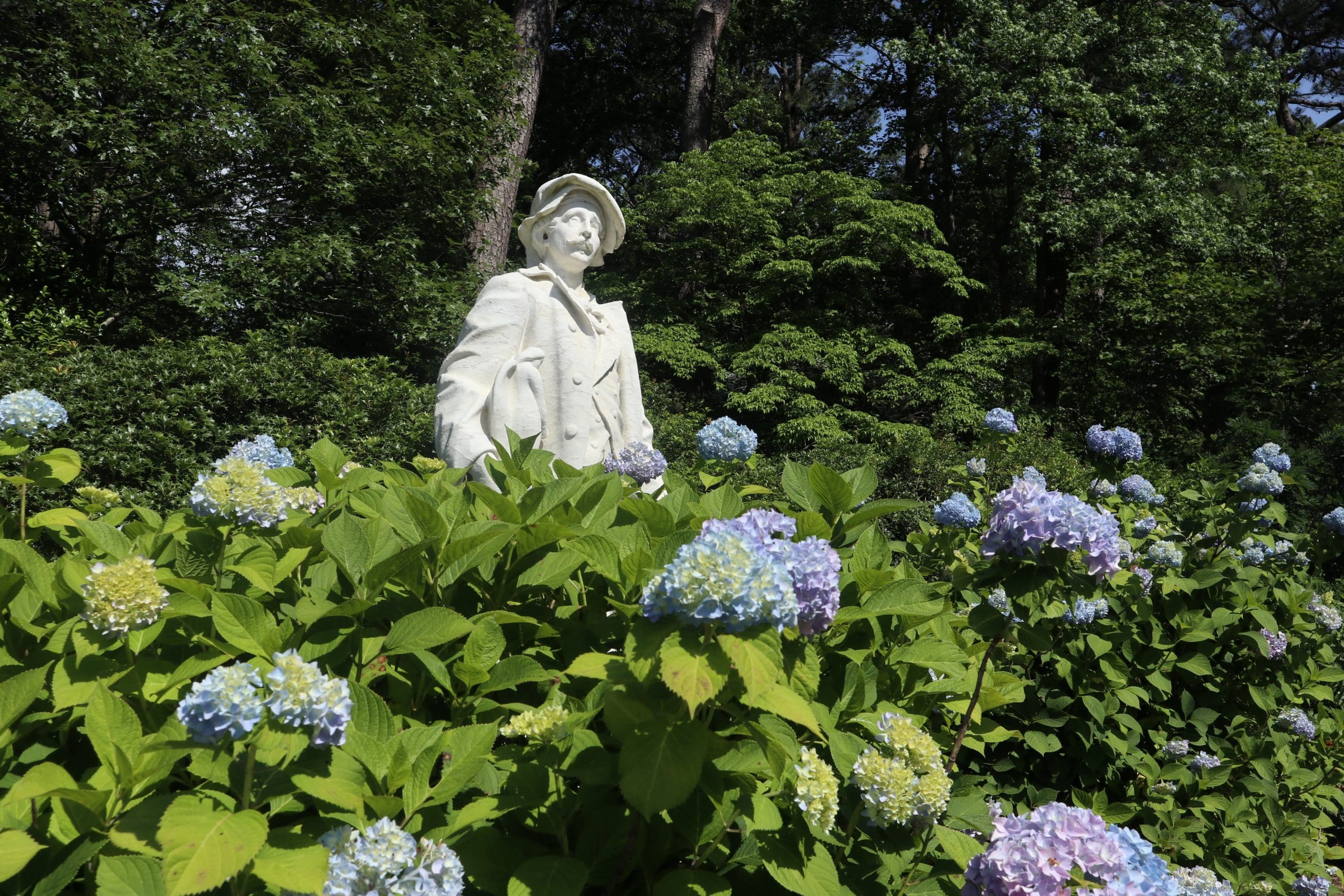
The sculptures by Sir Moses Ezekiel in Statuary Vista received the 2011 People’s Choice award in the Virginia’s Top Ten Endangered Artifacts program.
Descend the steps below NATO Overlook and enter a different world. Tropical and subtropical plants that thrive outdoors in Hampton Roads line the bank of the canal. A warm microclimate created by the water and protected hillside help these plants survive a winter here but not elsewhere in Virginia since Norfolk is at the northern edge of USDA zone 8.