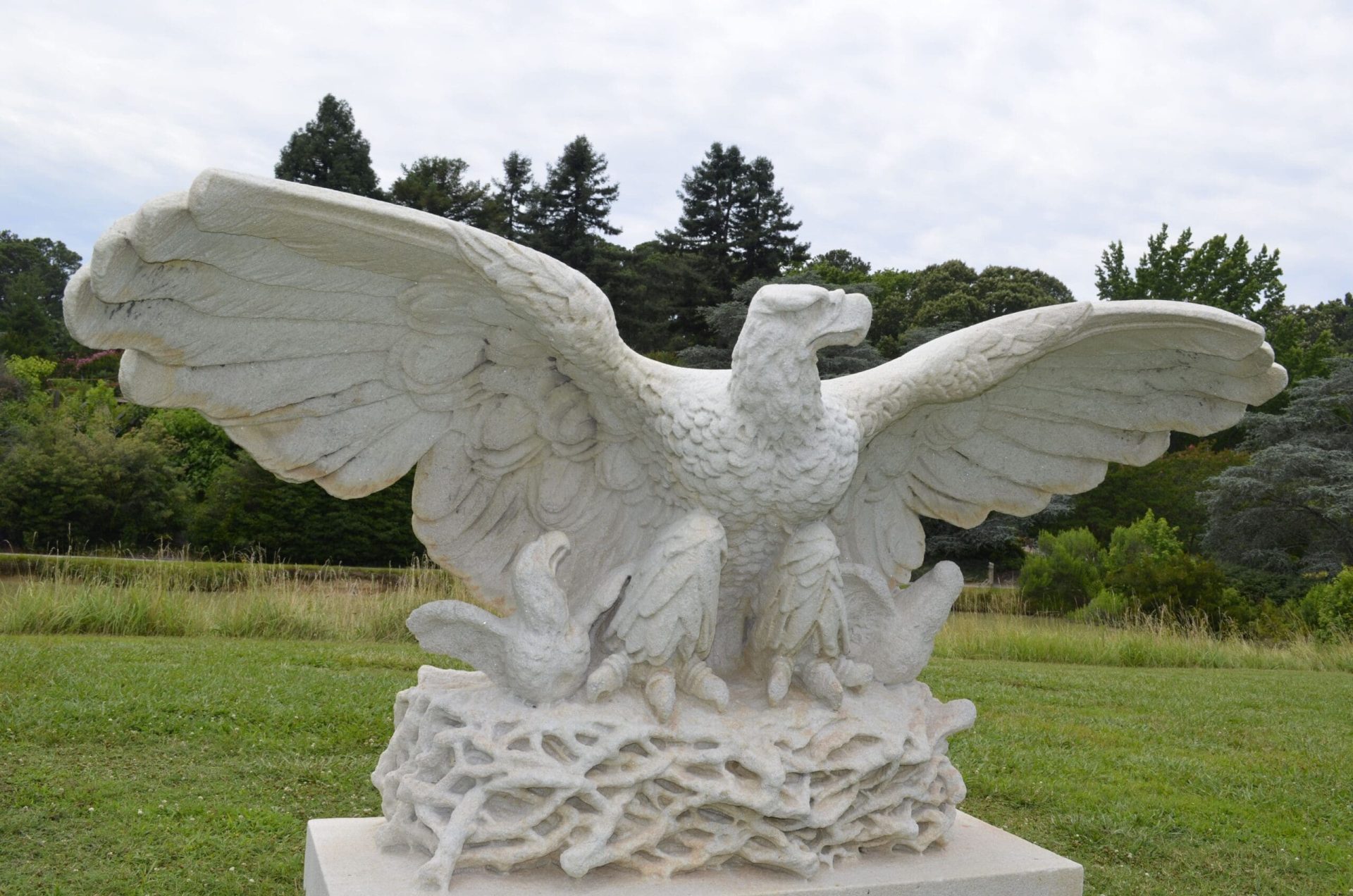
Date: 1962
Site Location: NATO Vista
Credit Line: Donated by Mr. and Mrs. Bruce Dunstan, In memory of his father Samuel B. Dunstan.
Collection: Individual Sculptures
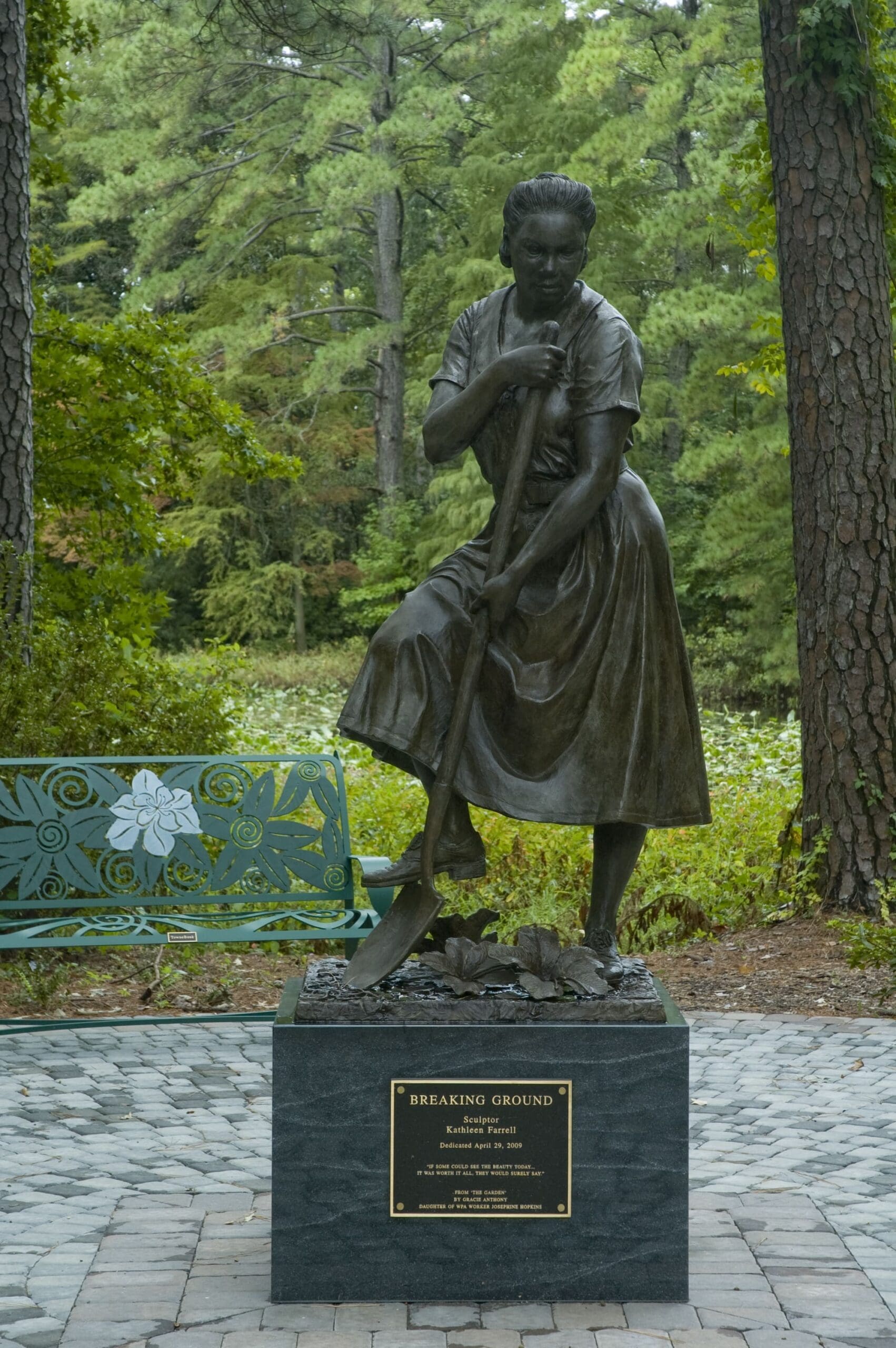
“Breaking Ground” is the design and creation of an original larger-than-life-size bronze sculpture honoring the 220 African-American women and men employed through the WPA Project to labor in the tree-filled swampland from 1938-1942. The artist used photos of actual WPA workers from the era and an African-American female model.
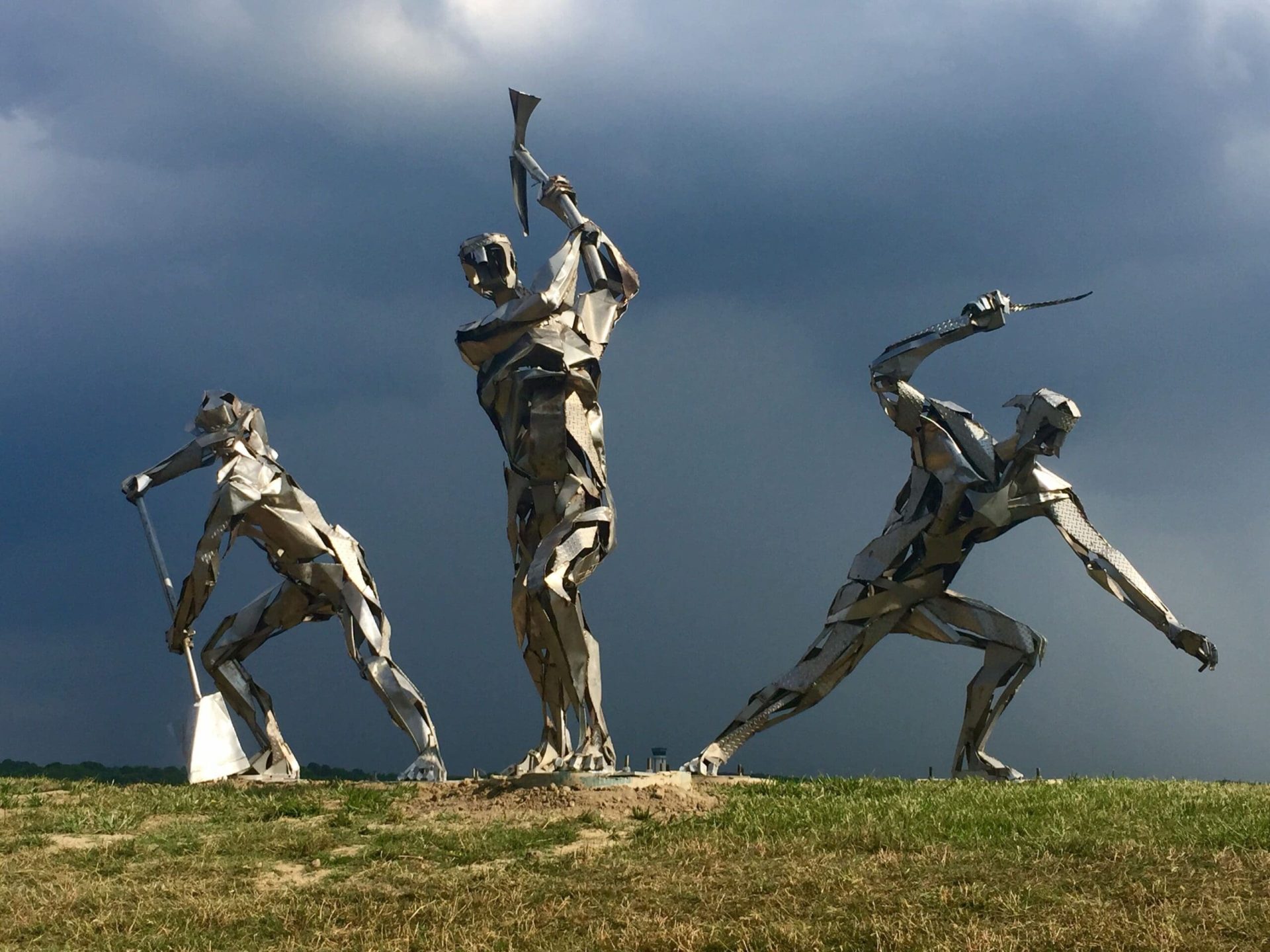
Peruko Ccopacatty is an internationally acclaimed artist recognized for creating larger-than-life sculptures and public murals that convey themes of family, work, struggle, and triumph. Born on Lake Titicaca in the Andes of Peru, Ccopacatty is an indigenous artist of Aymara descent. His work expresses his personal identification with his rich cultural heritage while focusing on the power of art to express the universal human experience. He attended the National School of Fine Arts in Lima, Peru, graduating in 1976 with the “Medalla de Oro”, the highest honor in sculpture. He immigrated to the United States in 1981 during the Peruvian Conflict to pursue his career as an artist. Norfolk, VA was home to his first exhibitions of public art between 1980—1985, including ‘Farmers’, originally commissioned for the Norfolk Farmer’s Market. Ccopacatty specializes in pieces that mimic the movement of living forms through the insinuation of tendons, bones, and muscles. The fluidity of his work is achieved through his open construction technique and his mastery of metal work. Through the reuse of discarded materials and the transformation of salvaged metal into art, he aims to convey the idea that humans can be a part of the solution to the scarcity of resources and the unintended impacts of progress. Peruko Ccopacatty received the United Nations Society of Writers and Artists Award of Excellence in 2003 for a life’s work of social relevance. He also received the honor of a solo exhibit of sculpture in the main hall of the UN New York headquarters. He believes art is a necessary form of social expression and promotes the coming together of community through shared experience. All of his pieces carry one common thread. We’re in this together. These sculptures were generously donated in memory of Bess and Julius Peck by their extended families.
“Intertwined” is a 20′ tall stainless steel sculpture by Mark Grieve & Ilana Spector of Petaluma, CA comprised of three entwined common garden forms arranged in a contemporary, joyous composition. A familiar common tool shape ties together the many themes of Norfolk Botanical Garden – the seasons, botany, community, pruning, planting & a connection to the land, history & men & women of the WPA. Organic forms connect in an illogical order harmonizing the garden site creating a conceptual intersection related to the man-made & natural rhythms of the garden.
Restoration of the sculpture was completed, in May 2022, by the firm Materials Conservation located in Philadelphia, Pennsylvania.
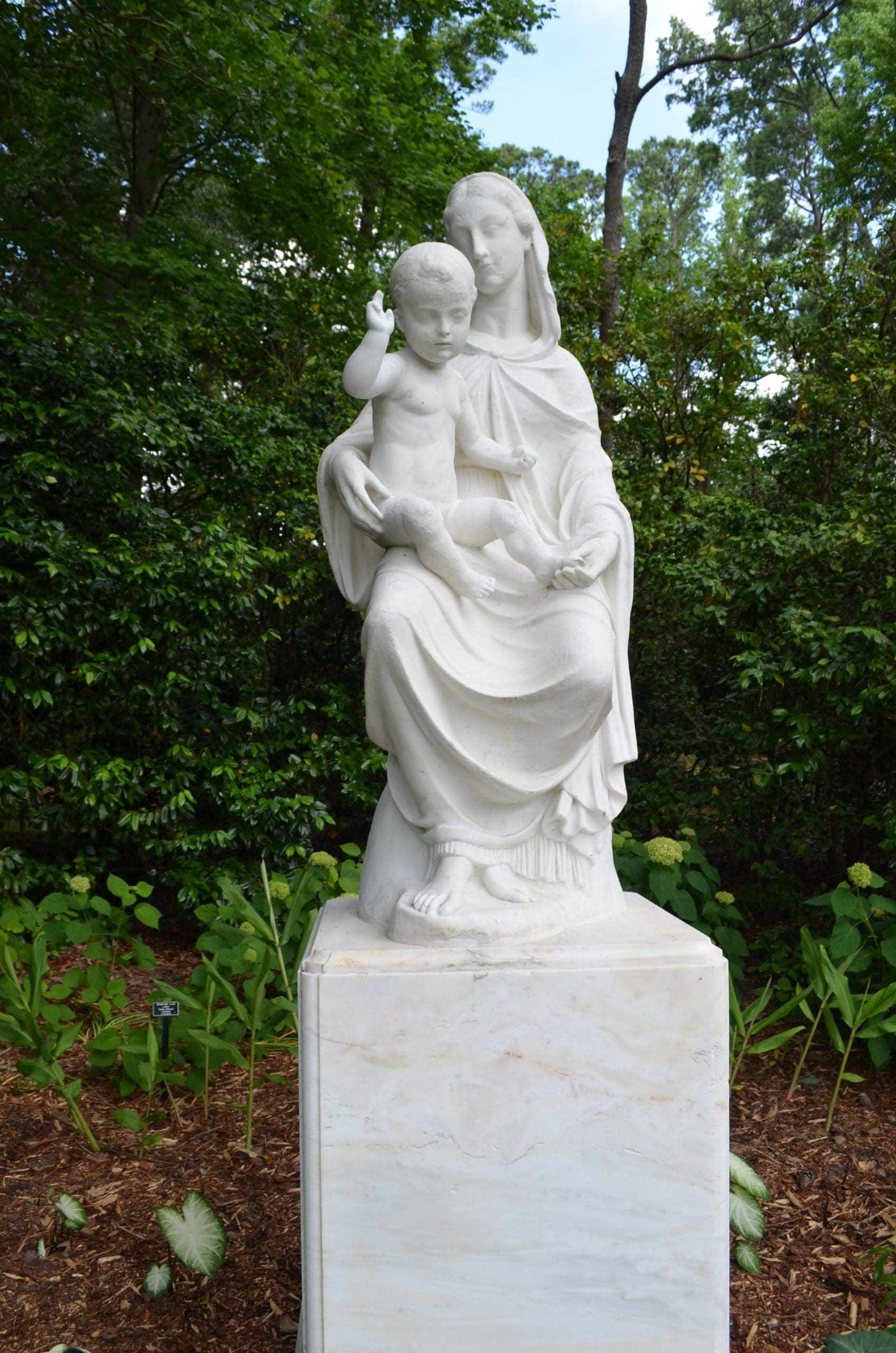
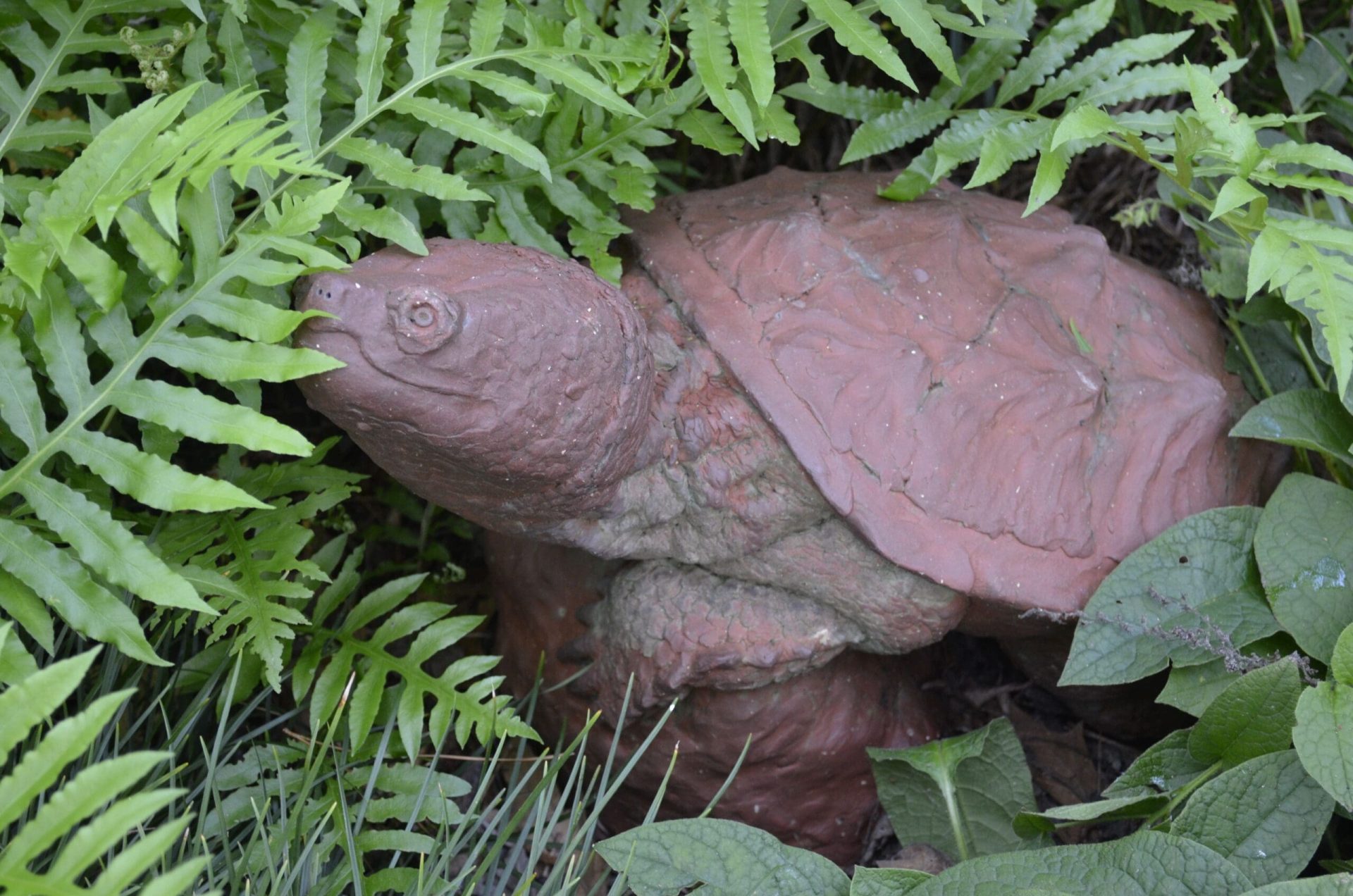
This terracotta sculpture was the first piece of statuary acquired by Fred Heutte for the Garden.
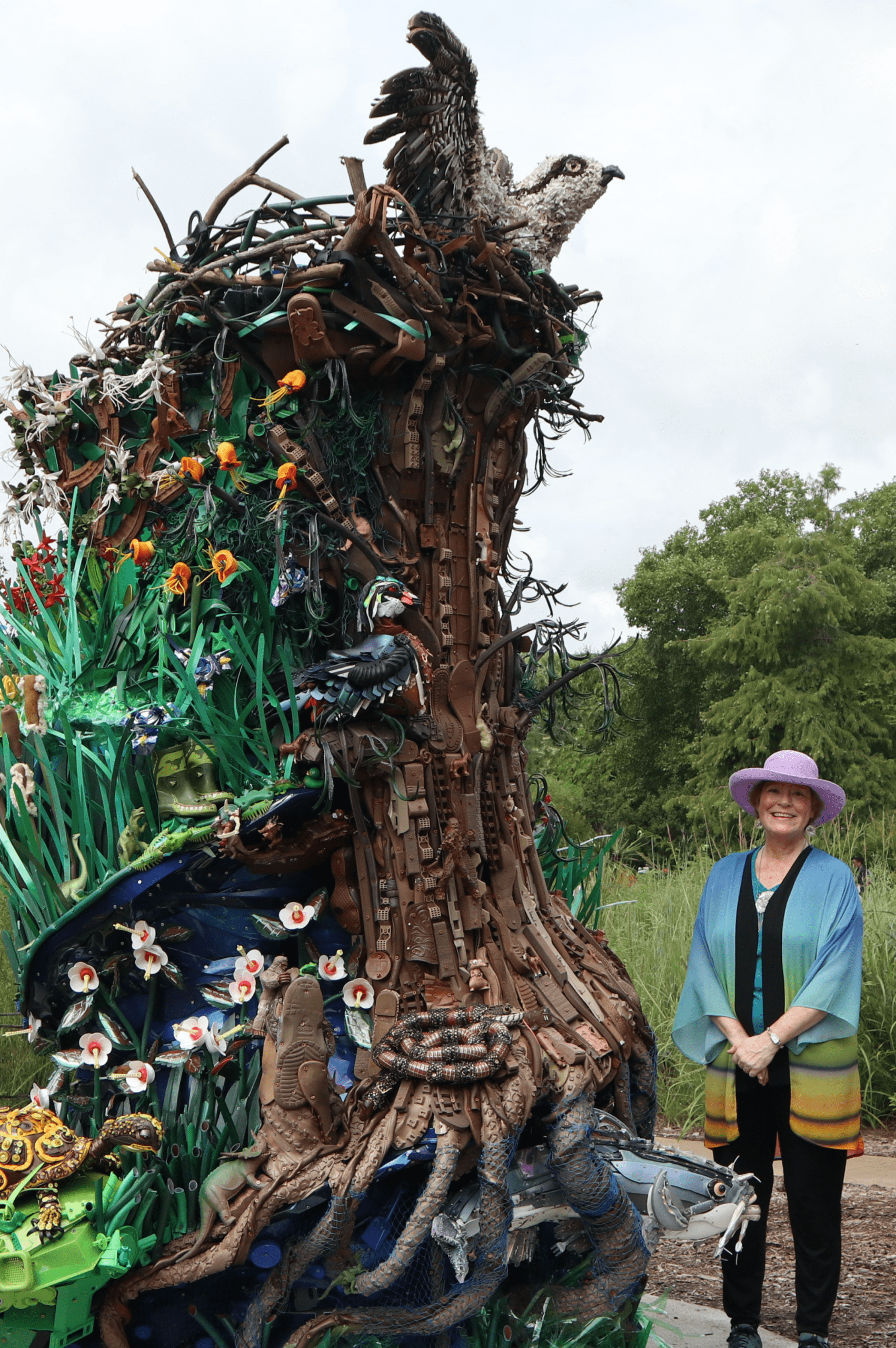
A swirling sculptural interpretation inspired by the plants and animals of the freshwater watershed surrounding Norfolk Botanical Garden, which connects to the larger Chesapeake Bay watershed. Crafted entirely from discarded plastic waste diverted from landfills.
Plastic pollution threatens all watersheds and the life they support. Artist Angela Haseltine Pozzi used this very material to build the sculpture, urging us to reflect on our choices and reduce our impact on the environment.
Inspired by the watershed surrounding Norfolk Botanical Garden, this sculpture is crafted from reclaimed plastics and discarded materials. It features birds, fish, insects, and plants that you might spot in and around our local waterways. At its center stands a bald cypress tree complete with distinctive “knees” – woody root structures that rise above wet ground. A broken top provides a natural nesting site for an osprey family. This sculpture reminds us what happens upstream affects all life throughout the watershed.